
iSET+ Insights

The latest thoughts, techniques, and emerging trends in Information Security and Artificial Intelligence.

Most Recent

From Zero to SOC Analyst: The Free 10-Lesson Course That Replaces Video Training With Real On-the-Job Shifts
Career Training

From Zero to SOC Analyst: The Free 10-Lesson Course That Replaces Video Training With Real On-the-Job Shifts

If you're stuck in the certification trap — Security+ on your resume but no idea how to actually triage a SIEM alert — the iSET+ SOC Analyst course is built to get you job-ready in days, not months. It's a free 10-lesson course that replaces passive video watching with interactive, read-along lessons you actually retain, each framed as a real on-the-job Shift. You start with a Your Work Environment brief that drops you at a Tier 1 SOC triage desk, then work through numbered shifts covering SIEM engineering with Splunk, KQL threat hunting in Microsoft Sentinel, PCAP network forensics with TShark, malware triage and static analysis, dynamic malware analysis in a Cuckoo sandbox, EDR hunting with CrowdStrike Falcon, threat intelligence with MISP, and automated SOAR playbook building with Cortex XSOAR. Every lesson includes step-by-step walkthroughs written so a 15-year-old can follow along, plus a live interactive terminal where you type real commands and see real output. No answer keys to click through — you actually do the work. The course caps with a 45-question interview bonus quiz that rotates through 6 versions so you can practice repeatedly without memorizing answers, covering IOC vs IOA, the NIST incident response lifecycle, MITRE ATT&CK mapping, phishing analysis, and false-positive triage. With ISC2 reporting a 4.8 million global cybersecurity workforce gap and ISACA finding 73% of hiring managers prioritize hands-on experience over certifications, the SOC Analyst course is the fastest path from certified-but-stuck to day-1-ready. Start your first shift today at https://isetplus.com/cybersecurity — it's free, and every completed lab earns a blockchain-verified Proof-of-Hack credential employers can verify instantly.
Demand Council & Talent Connection: How Industry Leaders and Employers Now Plug Directly Into the iSET+ Talent Pipeline
Platform Updates

Demand Council & Talent Connection: How Industry Leaders and Employers Now Plug Directly Into the iSET+ Talent Pipeline

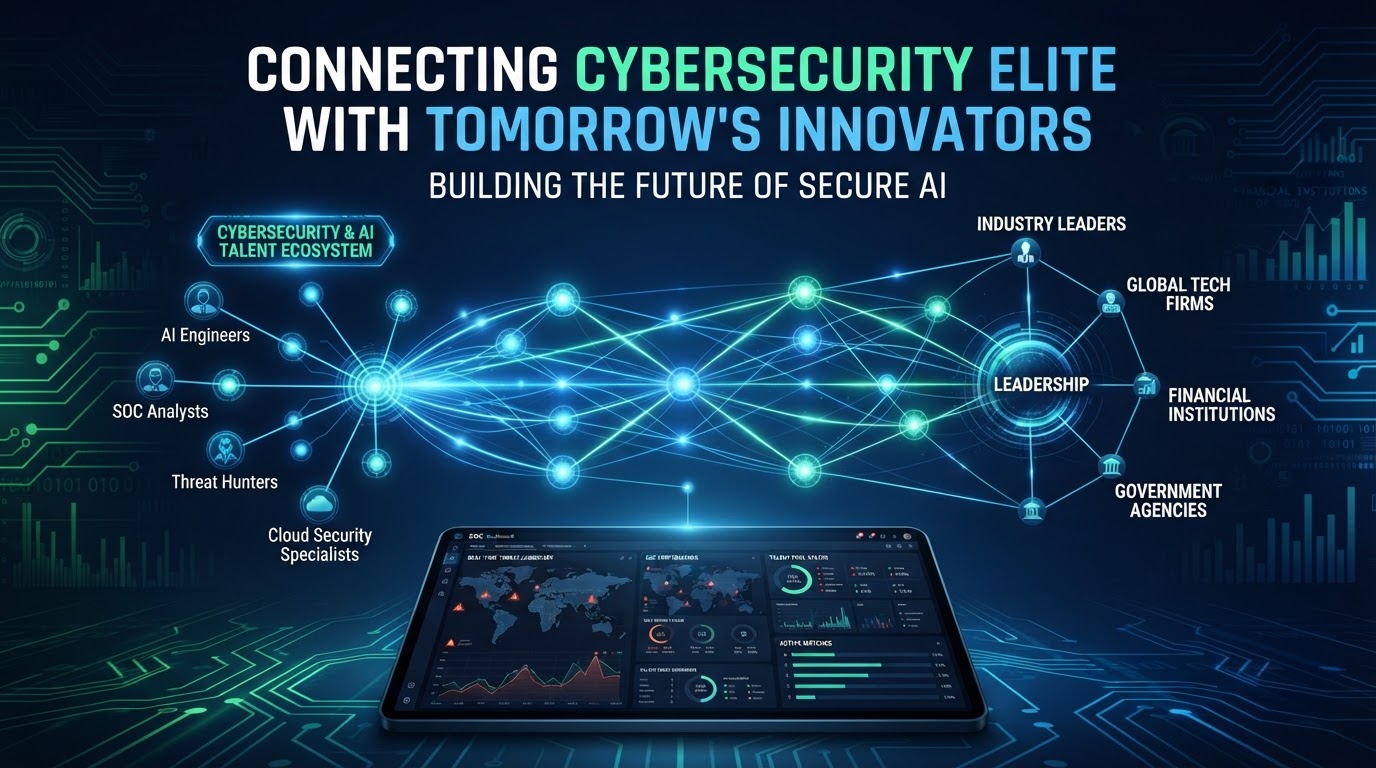
iSET+ just closed the loop between what the industry needs and who can actually do the work. The new Demand Council at /demand-council lets industry leaders flag the real skill gaps they see on the ground — the roles they can't fill, the tools candidates arrive without, the certifications that no longer map to the job — so iSET+ can build training around what the market is actually asking for, not what a syllabus guessed three years ago. On the other side, the Talent Connection portal at /talent-connection gives employers direct access to verified, job-ready candidates whose skills are backed by blockchain-verified Proof-of-Hack credentials and shareable Proof-of-Skill Snapshots. No more sorting through resumes that list Security+ but can't explain a SIEM pipeline. Employers see proof first, then decide. Together these two portals turn iSET+ from a training platform into a live demand-to-talent pipeline: industry voices what it needs, iSET+ builds the training, learners prove the skills, and employers hire with confidence. Here's how both portals work, why they matter for closing the 4.8 million cybersecurity workforce gap, and how to get your organization plugged in today.

The Countdown to Q-Day: Why Post-Quantum Cryptography Migration Is the Biggest Conversation in InfoSec Today
Emerging Technology

The Countdown to Q-Day: Why Post-Quantum Cryptography Migration Is the Biggest Conversation in InfoSec Today

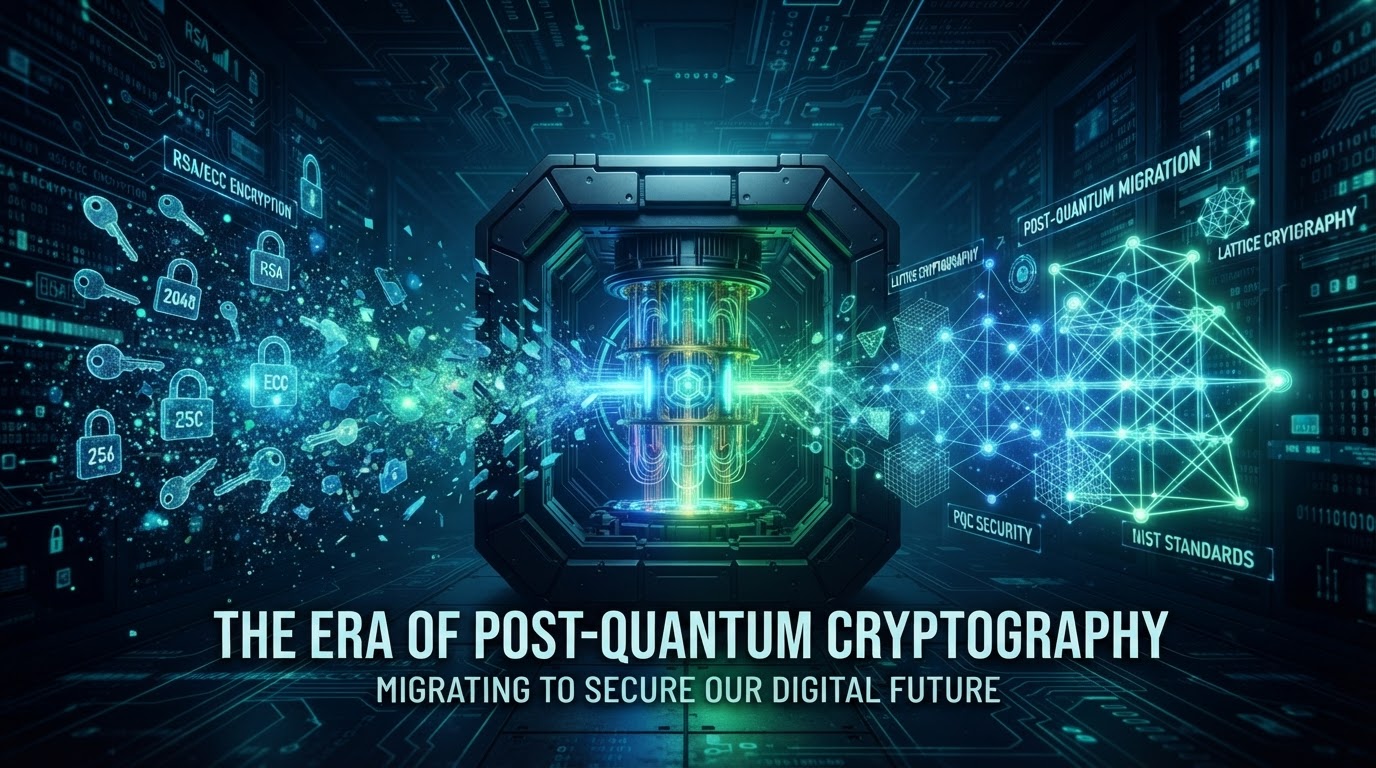
NIST has finalized its first post-quantum cryptography standards (FIPS 203, 204, 205), and the race to migrate every system on Earth off RSA and ECC is now the single biggest topic in the infosec and emerging tech industries. The threat isn't theoretical — it's 'harvest now, decrypt later,' where adversaries are stockpiling encrypted data today to crack once a cryptographically relevant quantum computer arrives. The U.S. Office of Management and Budget has ordered federal agencies to complete PQC inventories by 2025 and begin migration by 2030. NSA's CNSA 2.0 mandate requires national security systems to adopt PQC. Google, Apple, Signal, and Cloudflare have already shipped post-quantum key exchange into production. But the real challenge isn't the math — it's the inventory. Most organizations don't even know where their cryptographic assets live, let alone which ones depend on algorithms that won't survive Q-Day. Here's a full breakdown of the NIST standards (ML-KEM, ML-DSA, SLH-DSA), the harvest-now-decrypt-later threat model, the NSA CNSA 2.0 timeline, what the major tech players have already shipped, and why cryptographic agility — not just algorithm replacement — is the real skill the industry is hiring for in 2026 and beyond.

Courses Reimagined: The New Shift-Based Training Layout That Feels Like the Job
Platform Updates

Courses Reimagined: The New Shift-Based Training Layout That Feels Like the Job

iSET+ just rebuilt every course from the ground up around a shift-rotation layout — and it changes how you learn. Instead of scrolling through a list of disconnected video lessons, each role now opens with a Your Work Environment brief that drops you into the exact setting you'd work in: a SOC analyst's multi-monitor triage desk, an AI engineer's MLOps pipeline, an AppSec engineer's CI/CD security gate. From there, every lesson is framed as a numbered Shift — Shift 01, Shift 02, Shift 03 — with a task type badge (Briefing, Hands-On Task, or Knowledge Check), a clear objective, and a 'You will actually do this' action label so you know exactly what real-world action you're performing. Each shift links directly into an interactive lab, video briefing, or flashcard deck, and the layout mirrors how senior engineers actually ramp on the job: environment context first, then guided tasks, then competency verification. Every role page also now shows three alternate search names (the job titles recruiters actually use) so you can find the exact role you're targeting. This isn't a cosmetic redesign — it's a structural shift from passive course consumption to active on-the-job training, and it's live across every role in both the cybersecurity and AI tracks today.

The Full Stack Upgrade: Skill Assessments, Audience Pages, Demand Council & Talent Connection — All Live on iSET+
Platform Updates

The Full Stack Upgrade: Skill Assessments, Audience Pages, Demand Council & Talent Connection — All Live on iSET+

iSET+ just shipped a wave of upgrades that turn the platform into a complete demand-to-talent pipeline. The new Skill Assessment engine at /skill-assessment lets you take real competency exams across four industry tracks (SOC Analyst, AI/ML Engineer, PCI DSS Specialist, LLM Red-Team Engineer) with two exclusive features no other site offers: an Adaptive Weakness Targeting engine that regenerates questions based on your weakest domains in real time, and a Proof-of-Skill Snapshot that generates a shareable, verifiable competency report tied to your blockchain ledger. Three new audience landing pages — /learners, /educators, and /institutions — each with a distinct signature section (a week-by-week Zero to Hired journey for learners, an Educator Matrix for instructors, and an Institution Dashboard for schools). The /home page now bridges the unemployment gap with a Demand. Validate. Connect. framework linking industry leaders to a Demand Council application and employers to a Talent Connection portal. Every card on /home has interactive hover-zoom imagery, and the homepage stats band now uses current 2025-2026 market data. Here's everything that shipped and why it matters for your career.

Hear the Interview: iSET+ Interview Simulator Now Speaks — and You Can Record Your Own Voice
Platform Updates

Hear the Interview: iSET+ Interview Simulator Now Speaks — and You Can Record Your Own Voice

The iSET+ Interview Simulator just became the most realistic interview prep tool on the market. Toggle on Audio Mode and the interviewer reads every question aloud with natural text-to-speech — category, difficulty, and full prompt — so you practice answering out loud under real conditions, not just reading text on a screen. But that's only half of it. The new Voice Studio lets you record your own voice reading each question, stored privately in your browser via IndexedDB, so your custom recording plays automatically instead of the synthetic voice. Train against your own tone, pace, and cadence — or have a mentor record questions for you. Combined with three role-specific tracks (SOC Analyst, AI/ML Engineer, AppSec Engineer), timed mock sessions, difficulty-weighted scoring, and a mapped study library, this is interview prep that finally feels like the real thing. Here's how audio mode works, why Voice Studio changes everything, and how to start practicing today.

Most Popular

Cracking the SOC Analyst Interview: 45 Questions That Separate Hired from Hopeful
Interview Prep

Cracking the SOC Analyst Interview: 45 Questions That Separate Hired from Hopeful

What does a Tier 1 SOC analyst actually do in the first 30 minutes of a phishing alert? What's the difference between an IOC and an IOA? Why do 67% of SOC candidates fail their technical interview on the first try? iSET+ just launched a free 45-question SOC Analyst Interview Bonus Quiz covering SIEM, Splunk, incident response, MITRE ATT&CK, threat hunting, and more — with instant scoring and explanations. Here's what's on it, why it works, and how to use it to land your first SOC job.

I Have Certifications But No Experience — How Do I Get Hired in Cybersecurity?
Career Strategy

I Have Certifications But No Experience — How Do I Get Hired in Cybersecurity?

This is the #1 question in cybersecurity subreddits, Discord servers, and LinkedIn DMs. You earned Security+, maybe CISSP, maybe OSCP — but every job posting wants 3-5 years of experience. Here's the exact 4-step framework iSET+ users follow to escape the certification trap, build verifiable proof, and land interviews without lying about experience. Spoiler: it involves live SIEM labs, blockchain-verified Proof-of-Hack credentials, and an AI-enhanced resume that imports your real skills.

Certified But Jobless: Why 73% of Hiring Managers Skip Paper-Only Candidates in 2026
Career Strategy

Certified But Jobless: Why 73% of Hiring Managers Skip Paper-Only Candidates in 2026

You passed Security+. You earned CISSP. You still can't get hired. ISACA data reveals 73% of hiring managers prioritize hands-on experience over credentials alone — and ISC2 reports 4.8 million cybersecurity roles sit empty because of it. Here's how the 'certification trap' works, why it's getting worse, and the exact steps to escape it with blockchain-verified Proof-of-Hack credentials.

Browse All 47 Articles in the Archive